
The Importance of Soft Skills in Technical and Competitive Environments
Have you ever wondered why some highly qualified professionals are promoted more often, while others with impeccable technical skills remain stagnant? The answer may lie in soft skills - behavioral skills that complement technical knowledge and are decisive for retaining talent. In sectors such as technology, engineering and finance, where technical expertise is a priority, many companies still neglect to develop these skills. The result? High turnover, demotivated teams and high costs for new hires.
A software engineer, for example, can master complex programming languages, but if they don't know how to work in a team or communicate ideas clearly, their potential is limited. Companies like Google and Microsoft have already identified that employees with strong emotional intelligence and adaptability tend to stay longer in the organization. Soft skills are not just "nice to have" - they are essential for creating a sustainable working environment.
But how do these skills relate to talent retention? Professionals who feel valued not only for what they do, but by how they do itAs a result, employees develop an emotional bond with the company. They see opportunities for growth, receive constructive feedback and adapt better to change. In a market where the competition for specialists is fierce, offering an environment that encourages skills such as empathy, resilience and creativity can be the difference.
Think about the last time you worked with someone who was technically brilliant but difficult to deal with. The negative impact on the organizational climate is immense, right? On the other hand, teams with diversity of thought and efficient collaboration are more innovative and productive. If you're a manager, have you considered including soft skills assessments in your promotion and feedback processes?
The Challenge of Retention in Technical Sectors: Why Behavioral Skills Make the Difference
Sectors such as IT, engineering and health face a paradox: demand for specialists is high, but so is turnover. A McKinsey study revealed that 40% of technology professionals have considered changing jobs due to factors such as lack of recognition and a toxic culture. This is where soft skills come in as an antidote. They help to build solid relationshipsreduce conflicts and increase job satisfaction.
Imagine a team of developers working on a critical project with tight deadlines. If the leader doesn't know how to manage expectations, listen to feedback and motivate the team, the stress could lead to mass layoffs. Now think of a manager who promotes alignment meetings, recognizes efforts and encourages continuous learning. The team not only delivers better results, but also stays together for longer.
Companies like IBM already adopt mentoring programs focused on communication and leadership, even for technical positions. And the results are clear: employees who take part in these initiatives are 30% more likely to remain with the company after five years. It's not enough to hire the best brains - you need to retain them with a culture that values the human behind the technical.
Have you ever felt that your interpersonal skills were decisive at some point in your career? Think about it. Often, it's the small gestures - like knowing how to listen or resolving a conflict with diplomacy - that create an environment where people want to stay.
Which Soft Skills are Most Relevant for Retaining Technical Talent?
Some skills stand out when it comes to retention in technical areas. Clear communicationfor example, is vital. A data scientist can create incredible predictive models, but if they can't explain their findings to non-technical stakeholders, their work loses impact. Training in storytelling and data presentation is an investment that many companies overlook, but which increases employee self-confidence and engagement.
Another crucial skill is adaptability. In sectors that evolve rapidly, such as cybersecurity or artificial intelligence, professionals who resist change are left behind. Companies that encourage a growth mindset (a concept popularized by Carol Dweck) create teams that are more resilient and less likely to seek external opportunities in the face of challenges.
Collaboration is also essential. A Harvard Business Review study showed that 86% of IT project failures are linked to a lack of cooperation between teams. When employees feel part of a cohesive group, job satisfaction increases - and with it, retention. Tools such as 360° feedback and team building dynamics can strengthen this aspect.
Finally, inclusive leadership makes a difference, even for those who don't hold managerial positions. Technical professionals who are encouraged to mentor colleagues or lead transversal initiatives develop a sense of purpose. Salesforce, for example, has a program called "Trailhead" that combines technical training with leadership development, resulting in retention rates above the industry average.
How to Implement Effective Soft Skills Development Programs
There's no point in recognizing the importance of soft skills if you don't take concrete action to cultivate them. The first step is assess the gaps of the team. Climate surveys, performance evaluations and even People Analytics tools can identify which competencies need attention. One telecommunications company, for example, discovered that its engineers had difficulty giving assertive feedback - and created specific workshops to solve the problem.
Another strategy is integrating soft skills into technical training. Cloud computing certification courses could include modules on time management or negotiation. Platforms such as Coursera and LinkedIn Learning offer hybrid content that balances hard and soft skills, making it easier for companies to adopt.
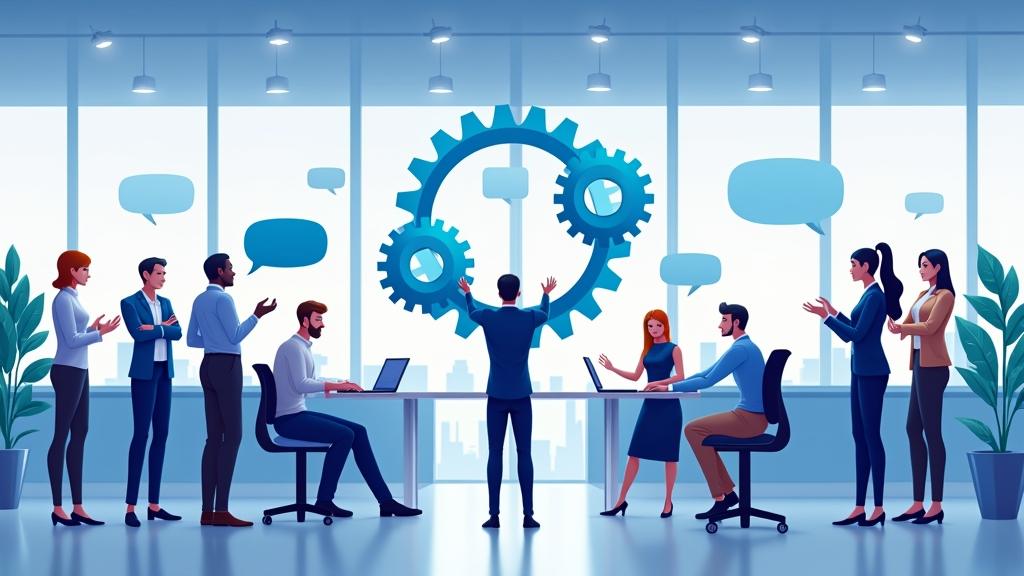
Mentoring and coaching are also powerful. Pairing junior professionals with experienced leaders not only accelerates technical learning, but also models positive behaviors. At NASA, mentoring programs have been part of the culture for decades, contributing to one of the lowest turnover rates in the aerospace sector.
Finally, reward soft skills. If an employee is technically excellent but toxic to the team, promoting them sends out the wrong message. Include criteria such as "contribution to the organizational climate" in performance appraisals and bonuses. Netflix is known for its "cultural fit" policy, where skills such as collaboration and curiosity are just as important as expertise.
Real Cases: Companies That Retain Technical Talent by Investing in Soft Skills
Some organizations are already reaping the rewards of this approach. A Zappos, for example, famous for its culture focused on happiness at work, offers emotional intelligence training for all employees - including developers. The result? A 50% retention rate higher than the online retail average.
Another case is that of Spotify, which adopted the "tribes and guilds" model to encourage collaboration between technical teams. Engineers participate in cross-functional groups where they share knowledge and develop skills such as active listening. The company registers a turnover below 10% in a market where 20% is considered acceptable.
Even in traditional sectors such as manufacturing, the change is visible. A Siemens implemented a program called the "Human Skills Initiative", where engineers learn about diversity and inclusion. In two years, employee satisfaction has risen by 35%, and voluntary redundancies have halved.
So, is your company ready to follow these examples? Remember: retention starts with culture (retention starts with culture). Small changes today can prevent big headaches tomorrow.
The Most Common Mistakes (and How to Avoid Them)
Many companies make mistakes when it comes to soft skills. One of them is think they are innate. Creativity, conflict management and critical thinking can - and should - be developed. Another mistake is focus only on generic training. Motivational talks don't solve your team's specific problems. Customize the solutions.
Ignore the measuring results is also serious. How do you know if your investments in soft skills are working? Define KPIs such as reducing turnover, increasing internal promotions or improving engagement surveys. Tools such as Gallup Q12 help to measure these aspects.
Finally, not involving the leadership is a shot in the foot. If managers don't show empathy or open communication, how can you expect the team to change? Programs like Cisco's "Leadership Circle" show that cultural transformations start at the top.
The Future of Retention: Soft Skills as a Competitive Differential
As automation advances, purely technical skills become commodities. What will set your company apart is the ability to create environments where talented people want to stay. Generation Z professionals, for example, value purpose and flexibility more than high salaries.
Tools such as AI are already being used to assess soft skills in selection processes (see the case of Unilever). And trends such as remote work require even more focus on virtual communication and autonomy.
Want some advice? Start small. Identify a critical soft skill for your team and test an intervention. Then scale up what works. The secret is not perfection, but continuous progress.
Which skill will you develop first? Share your ideas and let's learn together!