The Impact of the "Reputation Economy" on the Labor Market
Imagine a world where your professional history is not defined by a static document, but by a dynamic network of evaluations, recommendations and verifiable projects. Welcome to reputation economyThis is a phenomenon that is radically transforming how we hire and are hired. Platforms like LinkedIn, Glassdoor and even internal feedback systems are replacing traditional CVs, creating an ecosystem where your digital reputation is worth more than diplomas or experiences listed on paper.
But why is this happening now? The answer lies in demand for transparency and the need to reduce risks in selection processes. Companies are tired of relying on inflated CVs or unverifiable information. Instead, they're looking for hard data: how other professionals rate your work, what projects you've delivered and even how you handle feedback. It's no wonder that 72% of recruiters use professional reputation platforms to make decisions, according to a LinkedIn study.
Have you ever stopped to think about how your online reputation is being built? If not, it's time to start. This article will guide you through the main aspects of this change, from the decline of the traditional CV to strategies for standing out in this new scenario.
The decline of the traditional curriculum
For decades, the CV has been the key document for getting a job. However, its effectiveness is declining. Why? Firstly, because it's easy to lie or exaggerate skills. A SHRM survey reveals that 75% of employers have already found fakes on CVs. Secondly, because a role doesn't capture skills such as collaboration, resilience or learning capacity - criteria that are increasingly valued.
Companies like Google and Amazon have already reduced the importance of CVs in their processes. Instead, they use practical assessments It is data from professional platforms. For example, Amazon created "Career Choice", a program that prioritizes verifiable skills in recognized training, not just diplomas. This reflects a cultural shift: what you did matters more than what you says he did.
But what about recruiters? Many admit that they only spend 6 to 8 seconds reading a CV. On platforms like LinkedIn, they can analyze recommendations, projects and even posts that demonstrate expertise. Imagine two candidates: one with an impeccable CV and the other with 20 detailed recommendations from former colleagues. Who gets more attention?
This doesn't mean that the CV will disappear completely. It is still useful in formal contexts or public tenders. However, its central role is being replaced by more dynamic and transparent tools. If you're still relying on him alone, you're falling behind.
How Reputation Platforms Are Shaping Hiring
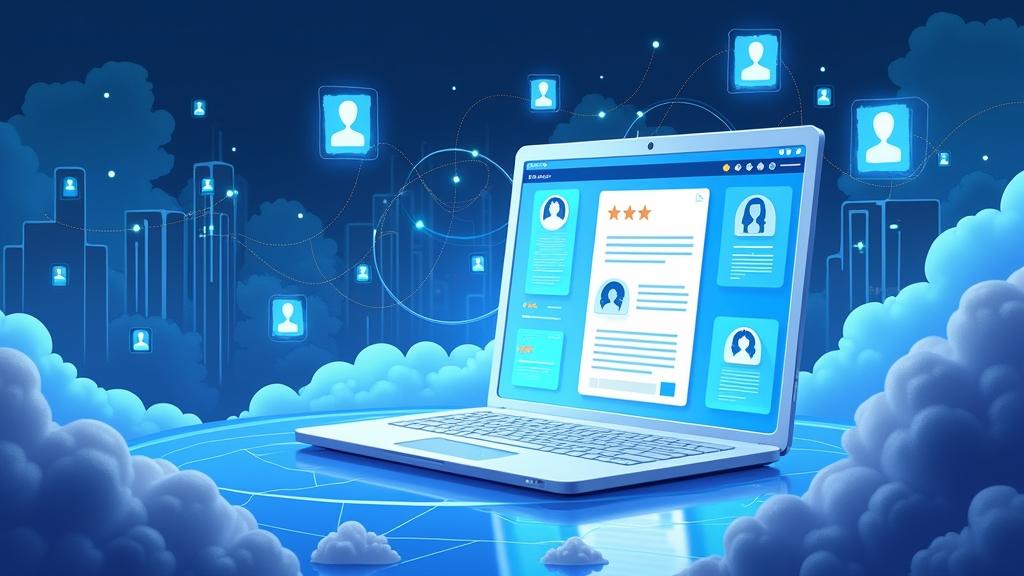
Platforms such as LinkedIn, GitHub (for developers) and even Glassdoor (where employees rate companies) have become professional reliability thermometers. They offer real-time data on performance, work ethic and even cultural compatibility. For example, a designer can be judged by their portfolio on Behance, while a consultant has their skills validated by clients on Upwork.
Companies are using this data in creative ways. Some tech startups no more initial interviews for candidates with strong profiles in technical communities. Others use automated scoringwhere algorithms analyze online reputation before a human even looks at the application. A HireVue, for example, combines video CV analysis with data from external platforms to predict cultural fit.
But there are risks. Algorithmic bias is one of them - systems can favor profiles similar to those of current employees, perpetuating a lack of diversity. In addition, those who don't have a strong digital presence can be made invisible, even if they are qualified. Are we exchanging one imperfect system for another?
Even so, the trend is clear: digital reputation has become a bargaining chip. A McKinsey study points out that 40% of hiring in 2025 will be based on data from specialized platforms. If you want to be found, you need to be where the eyes (and algorithms) are.
The Rise of the Professional Social Proof
Would you trust a stranger more or someone recommended by three colleagues in your network? This is the principle of social proof - the idea that social validation increases credibility. In the job market, this translates into public recommendations, skills endorsements and even performance appraisals on platforms.
A case in point is Upwork. There, freelancers with good reviews can charge up to 70% more than new users. It's not magic: it's social proof in action. Similarly, on LinkedIn, profiles with more than 10 recommendations have 3x more chances of being contacted by recruiters.
But how do you build this social proof? A few tactics:
- Ask for specific feedback after projects ("What was it like working with me on launch X?");
- Take part in discussions in professional groups, showing expertise;
- Document results with metrics ("I increased traffic by 150% for customer Y").
Beware, however, of pitfalls. Some try to inflate their reputation with fake endorsements or by buying followers. Platforms are getting smarter - LinkedIn already removed millions of fraudulent profiles in 2023. Reputation can't be bought, it can be earned.
The Dark Side: Bias and Exclusion in the Reputation Economy
It's not all flowers. Reputation-based systems can amplifying inequalities. Professionals from peripheral regions, for example, often have less access to influential networks. A Harvard Business Review study showed that women and minorities receive fewer endorsements for "leadership" skills, even with equivalent qualifications.
There is also the risk of professional cancellation. A single piece of negative feedback - fair or not - can tarnish a profile forever. Platforms like Glassdoor face criticism for allowing anonymous reviews, which are sometimes used for personal attacks. How do you balance transparency and fairness?
Some solutions are emerging. A Blind, for example, requires employment verification for comments, reducing trolls. Other companies are testing contextual reputationwhere evaluations are linked to specific projects, not just people.
Have you ever wondered how you would be judged by such a system? Reflection is necessary, because the reputation economy is here to stay - but it needs to be improved if it is to be truly inclusive.
How to Adapt Your Career to This New Reality
If reputation is the new CV, how do you prepare? Start by treating your online profile as a professional assets. That means:
- Update regularly projects and achievements (not just when you're looking for a job);
- Cultivating relationships genuine - reputation is built in a network;
- Ask for feedback strategically, not generically.
A practical example: João, a marketing analyst, started publishing case studies on LinkedIn about campaigns he had led. In 6 months, he received 3 job offers without having to send a CV. His work spoke for him.
Tools such as Adobe Portfolio for creatives or GitHub for devs allow them to show their skills in practice. For less technical areas, even a well-structured blog can serve as proof of critical thinking.
Remember: reputation is not about looking good, but about being good. Invest in real skills, and visibility will follow.
The Future: Portable Reputation and Blockchain
The next frontier is portable reputationwhere your credentials follow you regardless of platform. Imagine a verifiable profile via blockchain, with immutable certificates, evaluations and employment history. Projects such as Learning Economy are already working on it.
This could reduce fraud and bureaucracy in hiring. A nurse, for example, could instantly share valid licenses and evaluations from former employers. Companies like IBM are testing systems where microcredit (such as short courses) are registered on the blockchain and accepted globally.
Challenges? Many. Standardization, data privacy and resistance from traditional institutions. But the potential is immense: a world where your trajectory is verifiable, fair and under your control.
Practical Tips to Stand Out
Finally, concrete actions to navigate this change:
1. Optimize your LinkedInUse keywords from your sector, add rich media (videos, presentations) and ask for recommendations.
2. Join communitiesStack Overflow for IT, Dribbble for designers - be where your audience is.
3. Monitor your reputationTools such as Google Alerts warn you when your name is mentioned.
4. Respond to criticismIf you receive negative feedback, respond professionally and propose solutions.
The reputation economy is not a passing fad - it's a fundamental redefinition of how we value work. What are you going to do today to shape yours?