The Phenomenon of "Career Collectors": A New Professional Era
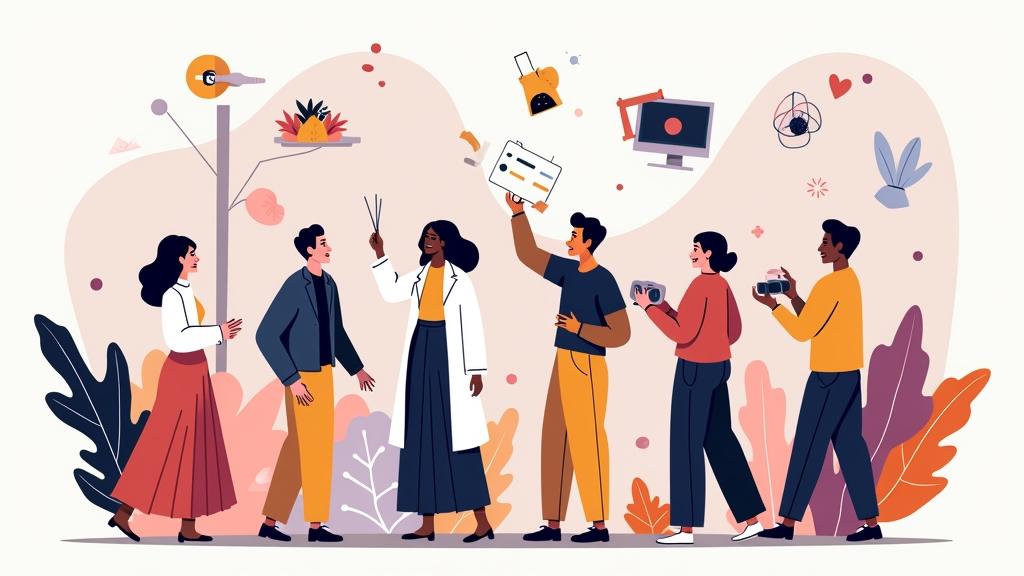
Imagine waking up in the morning and, before you've even had your coffee, reviewing your week's schedule: Monday you're a marketing consultant, Tuesday you teach yoga classes, Wednesday you work as a freelance developer and Thursday you run a handicraft e-commerce business. Sound chaotic? For the new generation of professionals, this is not only possible but desirable. We are facing a movement that challenges the traditional logic of single, linear careers.
What's behind this change? The answer is multifactorial. Technology has enabled flexibility, globalization has expanded opportunities and the search for purpose has redrawn priorities. While our parents and grandparents saw stability as synonymous with success, millennials and Generation Z see professional diversity as freedom and growth.
But how should companies and managers deal with this transformation? What's more, how can you, as a professional or entrepreneur, navigate this scenario without getting lost? We'll explore everything from the roots of this phenomenon to practical strategies for adapting - whether on the employee or employer side.
The Death of the "Job for Life"
A few decades ago, the ideal career path was clear: join a young company, climb the ranks and retire with a plaque of appreciation. Today, this narrative sounds almost romantic - and outdated. Data from LinkedIn show that professionals under 35 change jobs on average every 2.5 years. And it's not just a question of changing companies, but of completely reinventing oneself.
Why is that? Firstly, the anxiety about continuous learning. In a world where technical skills become obsolete within a few years, standing still means being left behind. Secondly rejection of routine. A study of the McKinsey revealed that 70% of young people prioritize intellectual challenges over salary. Thirdly platform economy, which has turned hobbies into income and connected talents to global opportunities.
Practical example: Carol, 28, a law graduate, works as a legal analyst three days a week, creates content about sustainability on social media and sells digital illustrations. For her, each "job" complements the other: legal work provides financial security, activism brings purpose and art expresses creativity.
What about you? Have you ever wondered what it would be like to divide your time between different areas? Or do you feel that a single role doesn't capture everything you have to offer?
Multipotentiality: The Superpower of the New Generation
Some people don't fit into boxes - they overflow. They are the "multipotentials", a term popularized by Emilie Wapnick in her famous TED Talk. These individuals have diverse interests and transferable skills that allow them to work in seemingly unconnected fields. And, contrary to popular belief, this is not a lack of focus, but an evolutionary adaptation.
How does this manifest itself in the market? Let's see: an IT professional who is also a chef can bring systems logic to optimize processes in a restaurant. A psychologist with a background in design creates more humanized user experiences. The intersection of knowledge generates innovation. Companies like Google already value "specialized generalists" in their selection processes.
Challenges of this approach:
1. Social responsibility"When will you stabilize?" is a common question.
2. Time managementBalancing multiple demands requires tools such as Trello or Notion.
3. PricingHow do you define the value of such varied services?
But the benefits outweigh the barriers. Developing multiple skills creates economic resilience - if one area suffers, others sustain. In addition, creativity flourishes in diversity.
The Rise of the Career Portfolio
The concept of a "portfolio career", coined by Charles Handy in the 1990s, has never made so much sense. The idea is simple: instead of a fixed job, you build up a range of paid activities that together form your income and identity. This can include freelancing, one-off projects, part-time jobs and even passive income.
Why is that attractive? Geographical flexibility, autonomy to choose who to work with and the chance to align work with personal values. Platforms such as Upwork It is 99Freelas are a breeding ground for these professionals.
Real cases:
- Marcos, a former engineer, is now an ESG consultant for construction companies (20h/week), a diving instructor at weekends and an investor in startups.
- Luíza combines academic research in biology with popularizing science on YouTube and selling online courses.
For companieshiring these profiles means access to:
- Upgraded skillsThey are constantly learning.
- Extensive networking: They bring together connections from various sectors.
- Out of the box solutionsThey see problems from unconventional angles.
The key is to structure contracts by projects, targets or hours worked, not by physical presence.
The B Side: When Diversification Becomes a Trap
It's not all flowers. Managing several careers can lead to burnout if there are no clear boundaries. The "work always on" syndrome is common, as different clients or employers can demand simultaneous attention.
Warning signs:
- Difficulty describing your profession in one word.
- Inconsistency in income (some months are great, others worrying).
- The feeling that none of the "careers" are making significant progress.
How to mitigate risks?
1. Define a core business: A main activity that provides 50-60% of income.
2. Use clear contracts: Avoid overlapping with tools such as Bonsai.
3. Make time for deep work: Block out uninterrupted hours for each project.
Remember: diversifying is different from dispersing. The goal is synergy, not survival in multitasking mode.
What Companies Need to Understand (and Do)
Organizations that insist on rigid models are losing talent. A report by Gartner points out that 65% of employees consider flexibility to be more important than promotions.
Necessary changes:
- Evaluate by resultsnot hours in the office.
- Offer side projects: Allow employees to dedicate 10-20% of their time to initiatives outside their core functions (such as the 3M).
- Rethinking benefits: Health and pension plans need to accommodate professionals with variable incomes.
Inspiring example: A Spotify created self-managing squads where employees can switch teams according to their interests.
Tools for the Multidimensional Professional
Anyone who navigates between worlds needs technology on their side:
- Organization: ClickUp to manage different projects.
- Finance: Accounted for for MEIs with multiple activities.
- Networking: Clubhouse and hybrid events to connect with peers.
Golden tip: Create a "competency map" listing the skills in each area and how they fit together. Graphic design + psychology, for example, could become emotional branding consultancy.
Preparing for the Future (Without Fear)
Whether you're a professional exploring this trend or a leader adapting your company, a few questions are essential:
- What soft skills do I have (or does my team have) that are underutilized?
- How can I structure my time or my organization to embrace this complexity?
- What do I learn in one area that can revolutionize another?
The truth is this: the future belongs to those who manage to be many in one. And that's not fragmentation - it's richness of perspective. How about starting today to redesign your relationship with work?
This article is not an end point, but an invitation to reinvention. Share your experiences or doubts in the comments. After all, the best way to understand this revolution is to build it together.