Who is Generation Z and Why is it Changing the Market?
Generation Z, made up of people born between the mid-1990s and the early 2010s, is the first truly digital generation. Unlike the millennials, who saw the birth of the internet, these young people were born connected. But what does this mean for the job market? Not only do they master technology, but they also bring with them values that are challenging traditional structures.
Imagine a 22-year-old who prefers working remotely from a café in Bali to being stuck in an office from 9am to 6pm. For them, flexibility is not a benefit, but a basic requirement. And that's not all: Generation Z prioritizes purpose, diversity and mental well-being. A study by [Deloitte](https://www2.deloitte.com/) shows that 49% of them would turn down a job offer if the company didn't align with their values.
But how does this affect companies? Organizations that insist on outdated models are losing talent. Z is not afraid to say "no" to toxic cultures or rigid hierarchies. They want autonomy, constant feedback and real opportunities for growth. If before the power was in the hands of employers, now the scales are tipping in favor of employees.
Have you ever stopped to think about how your company is adapting to this change? Ignoring these demands could mean being left behind in an increasingly competitive market.
The Search for Purpose: Work that Makes Sense
For Generation Z, a high salary isn't enough. They want to work for companies that have a positive impact on the world. What matters is not just what they do, but why they do it. A report by [McKinsey](https://www.mckinsey.com/) reveals that 70% of young professionals prefer employers with strong social and environmental responsibilities.
A practical example? A technology start-up that develops apps for education in underprivileged communities is much more likely to attract Z talent than a traditional corporation without sustainable initiatives. These young people don't just want to "get the job done"; they want to see their work generating real change.
And this is no passing fad. Companies like Patagonia, which donates 1% of its sales to environmental causes, or Salesforce, with its culture of integrated philanthropy, have already got the message. When the purpose is authentic, Generation Z engages wholeheartedly.
But what if your company doesn't yet have a clear purpose? Start by listening to your younger employees. They could be the key to rethinking missions and values in a more inclusive and relevant way.
Flexibility as the New Standard: Goodbye, Traditional Office
If there's one thing the pandemic has accelerated, it's the acceptance of remote working. But for Generation Z, this isn't an exception - it's the rule. They don't see the point in spending hours in traffic to carry out tasks that could be done from anywhere.
A study by [LinkedIn](https://www.linkedin.com/) shows that 72% of Z professionals consider flexible working hours to be more important than a 10% higher salary. And it's not just about the home office: they want control over their schedules. Working from 11am to 7pm? Why not, if the result is the same?
Companies like Spotify have already adopted "Work From Anywhere", allowing employees to choose their place of work. Others, like Basecamp, have reduced working hours to 4 days a week - and productivity has increased. The message is clear: trusting the team generates better results than micromanagement.
But how do you implement this without losing control? Tools like Trello, Slack and OKRs (Objectives and Key Results) help maintain productivity without stifling freedom. The key is to measure results, not hours worked.
Diversity and Inclusion: Not About Quotas, but About Respect
Generation Z is the most diverse in history - and they expect the same from companies. For them, diversity is not a "differentiator", but a basic requirement. Research shows that 77% of these young people consider it essential to work in inclusive environments.
One emblematic case is Adobe, which created mentoring programs for underrepresented groups and saw its innovation soar. Another example is Accenture, which publishes transparent reports on pay equity. These are concrete actions, not just speeches.
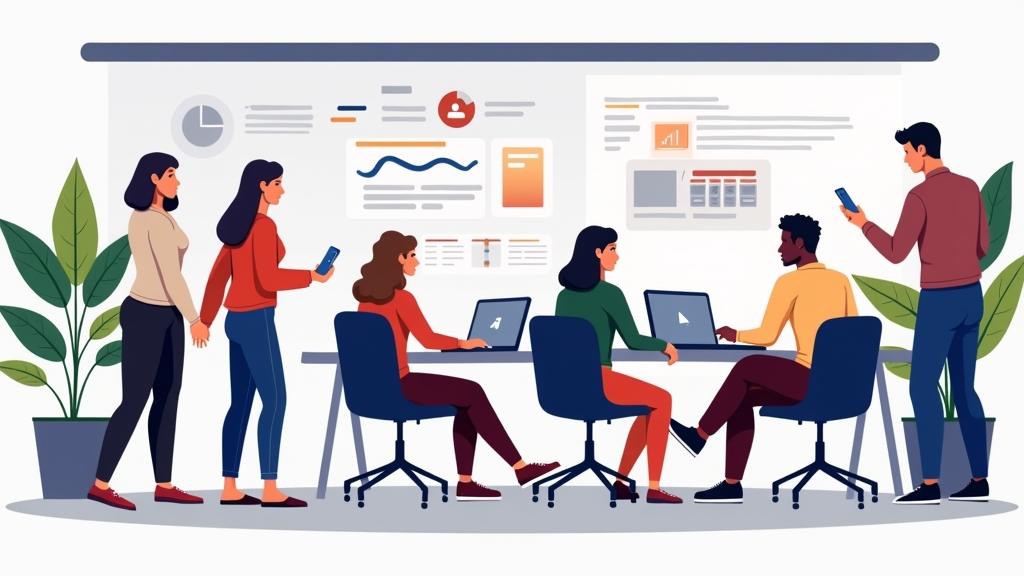
But beware: there's no point in hiring diverse people if the corporate culture is still exclusionary. Z notices when inclusion is just for show. They want accessible leaders, clear anti-harassment policies and safe spaces for marginalized voices.
Is your company prepared for this? How about starting with real unconscious bias training and anonymous reporting channels? Small changes can make all the difference.
Real-Time Feedback: End of Annual Evaluations
Forget that annual performance meeting full of formalities. Generation Z grew up with likes, comments and instant replies - and they expect the same at work. They don't want to wait 12 months to find out if they're doing well.
Companies like Netflix have already replaced formal evaluations with weekly check-ins. At Google, leaders are trained to give "escalating and constructive" feedback, focused on development, not empty criticism.
This doesn't mean that Z is fragile. On the contrary: they see feedback as a tool for growth. But it needs to be specific, frequent and bilateral. After all, why should only leaders have a say?
How about trying out pulse surveys or platforms like 15Five, where employees share achievements and challenges in real time? When the dialog flows, everyone wins.
Technology and Automation: Less Bureaucracy, More Efficiency
Nothing discourages Generation Z more than slow, repetitive processes. They want tools that simplify their work, not make it more complicated.
If your company still uses endless spreadsheets or requires three approvals for a simple decision, it's time to rethink. Platforms like Zapier automate boring tasks, while Notion centralizes projects in one place.
A practical example: instead of spending hours in unnecessary meetings, Z teams prefer to record short videos on Loom or solve questions on Slack. They have no patience for bureaucracy - and that can be great for productivity.
Have you thought about mapping out which processes in your company could be automated? Sometimes a simple WhatsApp bot can save days of manual work.
The Future of Work: What to Expect in the Next Few Years?
Generation Z isn't just entering the market - it's reshaping it. In a decade's time, concepts such as "permanent position" or "compulsory office" may seem as outdated as typewriters.
Any predictions? Non-linear careers, where people accumulate experience in multiple areas, will be common. Companies that invest in mental health (such as Headspace offering free therapy) will have a competitive edge. And the metaverse could become the new "workspace".
But perhaps Z's greatest legacy is the humanization of work. They prove that it is possible to be productive without giving up happiness, fun and purpose.
Are you ready for this revolution? How about starting today by reviewing your company's culture? After all, the future doesn't wait - and Generation Z is already here.