The Silent Revolution: How AI is redefining what it means to be competent
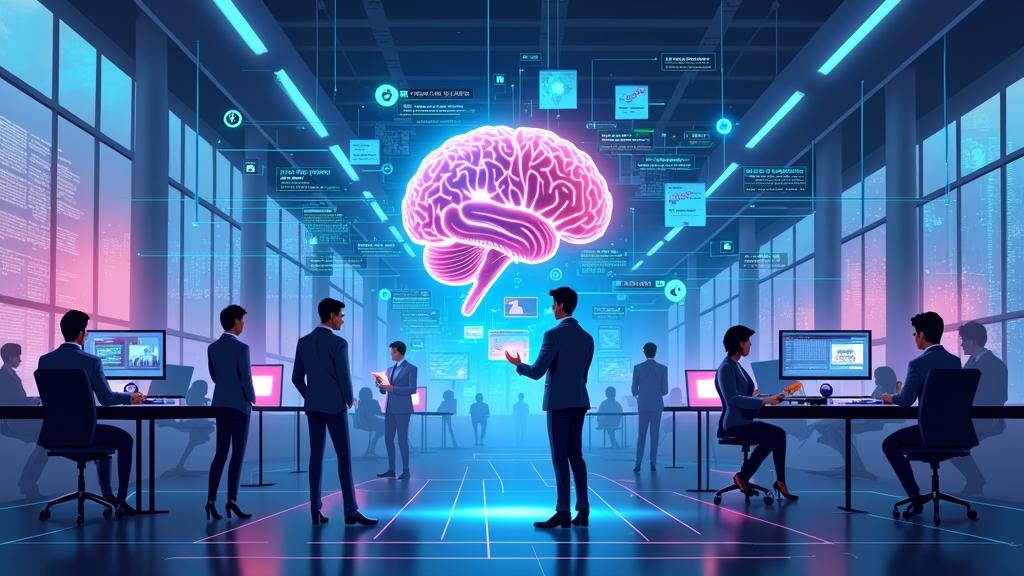
Imagine a world where machines not only perform repetitive tasks, but also analyze complex data, create strategies and even simulate empathy. This scenario is already a reality, and artificial intelligence (AI) is reshaping the skills that ensure market relevance. It's no longer about competing against people, but collaborating with algorithms. In this article, we will explore how this transformation requires new skills and mindsets.
The rise of socio-emotional skills
A decade ago, mastering spreadsheets or programming languages was enough to stand out. Today, with AI taking over technical tasks, soft skills such as creativity, resilience and emotional intelligence have become gold. A report by the World Economic Forum points out that 58% of the skills required in 2025 will be linked to unique human competencies.
Why is that? Machines have yet to genuinely replicate the ability to negotiate conflicts or inspire teams. A practical example: while a chatbot solves standard queries, a human manager turns feedback into motivation. Companies like Google already prioritize candidates with "learnability" (ability to learn quickly) instead of traditional diplomas.
But how can these skills be developed? Non-violent communication courses, leadership mentoring and even mindfulness practices have gained ground. The tip is clear: invest in self-knowledge. Tools such as the StrengthsFinder test help you map out your strengths. Have you identified yours?
The Data Domain is No Longer Optional
AI processes information on an unimaginable scale, but it is still humans who interpret this data. Knowing how to extract insights from dashboards or cross-reference metrics has become essentialEven for non-technical areas. Marketing professionals, for example, use platforms such as Google Analytics to adjust campaigns in real time.
An emblematic case is Netflix, which combines recommendation algorithms with human analysis to understand cultural preferences. Here, the difference lies in asking the right questions of the datanot just collecting them. Free courses like the Data Literacy Project democratize this knowledge.
And if you think this is just for "geeks", think again. A teacher who uses adaptive learning reports to personalize lessons is practicing data literacy. The challenge? Put your fear of numbers aside. Start with the basics of Excel or visual tools like Tableau Public.
Adaptability: The Queen Skill
In a market where tools like ChatGPT are evolving every week, resisting change is a risk of obsolescence. A McKinsey study reveals that 87% of executives face skills gaps in their teams due to the speed of innovation.
Professionals who thrive are those who treat their career as a "permanent beta". Take Sarah, a designer who switched to UX Research when she realized that AI was generating basic layouts. She used Coursera courses to retrain within months. The lesson? Be willing to unlearn.
How can you cultivate this mindset? Try parallel projects in different areas, take part in hackathons or test new free tools such as Notion AI. Ask yourself: what skill can you learn this quarter that would have been unthinkable five years ago?
Human-Machine Collaboration: The New Normal
Afraid AI will steal your job? The truth is more subtle: those who use AI as an ally have a competitive advantage. Journalists use Grammarly to refine texts, doctors use AI-assisted diagnoses and architects generate prototypes in Midjourney before detailing them manually.
A real example is the partnership between radiologists and systems such as IBM Watson Health, which reduces errors in medical images. The secret lies in complement, not replace. How about trying ChatGPT to brainstorm ideas before refining them with your human touch?
The next step is to master "prompt engineering" - the art of instructing AIs to get better results. Platforms such as Learn Prompting offer free training. Remember: machines are tools. Whoever controls them wisely dictates the pace of the game.
Critical Thinking in a World of Algorithms
With AI generating content in seconds, evaluating the quality of information has become a vital skill. In 2023, OpenAI admitted that ChatGPT can "hallucinate" facts. Professionals who check sources, contextualize data and question algorithmic biases are irreplaceable.
Take the case of banks that use AI to approve credit, but keep analysts to review borderline cases. The key is to balance efficiency and ethics. Courses such as Cambridge University's Critical Thinking help to sharpen this skill.
Have you? Have you ever thought about how the algorithms of your social networks shape your opinions? Exercise healthy skepticism: compare sources, seek out experts and be wary of ready-made answers. After all, machines don't have ethics - people do.
Applied Creativity: Beyond Idea Generation
AI can compose music or sketch logos, but human creativity solves real problems. While DALL-E creates images, an art director adapts them to tell stories that connect brands and consumers. The difference lies in intention and emotional impact.
Companies such as Adobe have integrated Firefly (generative AI) into their software, but point out that value lies in human curation. An advertiser who uses these tools to iterate quickly, but adjusts every detail to the target audience, is ahead of the game.
How can you train this skill? Practice design thinking, take part in innovation workshops or try out tools like Runway ML to see how AI can extend (not replace) your creative process. Challenge yourself: use an AI tool to generate 10 ideas and then refine the best one with your unique experience.
Lifelong Learning: The Only Constant
If there is one certainty in this age of disruption, it is that continuous learning is the only stepping stone to relevance. Micro-certifications, nano-courses and even specialized podcasts (such as "The AI Breakdown") are valuable resources.
Look at Amazon, which has invested US$ 700 million to train employees in AI skills. The model is clear: those who don't keep up to date are left behind. Platforms like Udacity offer programs focused on the immediate future, such as AI Engineering.
What's your next step? Start small: dedicate 30 minutes a day to an online course, sign up for a newsletter like Exponential View or join Discord communities on innovation. The market of the future belongs to the curious.
Conclusion: The Future is for the Adaptable
AI is not a threat, but a mirror that reflects what makes us human. The most valuable skills now are those that differentiate us from machines: empathy, curiosity and the ability to make sense of data. The challenge is to embrace change as part of the journey.
How about starting today? Try out an AI tool applied to your area and think: how can you integrate it into your workflow to free up time for what really matters? Tomorrow belongs to those who dare to evolve along with technology.