How to Stand Out in Selection Processes for Remote Jobs: Effective Strategies from the CV to the Interview
The remote work market has grown exponentially in recent years, offering global opportunities and flexibility. However, competition has also increased, requiring candidates to adopt different strategies in order to stand out. If you're looking for a remote position, you need to go beyond the basics. How can you turn your CV into an attraction for recruiters? What skills are essential for a successful online interview? We'll explore everything from the initial preparation to the final selection phase.
Understanding Companies' Expectations for Remote Jobs
Before sending in your CV, it's crucial to understand what companies are really looking for in remote professionals. Unlike the face-to-face model, remote work requires autonomy, discipline and specific technical skills. Many organizations value candidates who have previous experience with collaboration tools such as Slack, Trello or Zoom.
In addition, global companies may prioritize professionals with fluency in English or other languages, depending on the market. Have you looked into the culture of the company you're applying to? Platforms such as Glassdoor offer valuable insights into employee evaluations and salary expectations.
Another essential point is adaptability. Working remotely means dealing with different time zones, adjustable deadlines and often multicultural teams. Demonstrating that you have had similar experiences - even in freelance projects - can be a big plus.
Finally, don't underestimate the importance of clear and assertive communication. In an environment where interactions are mostly written (emails, messages), being able to convey ideas concisely avoids misunderstandings and increases your efficiency.
Creating a Resume that Catches the Eye Amid Hundreds of Applications
A CV for remote vacancies needs to be optimized for both applicant tracking systems (ATS) and human assessment. Start by using relevant keywords from the job description. If the company is looking for a "project manager with experience in agile methodologies", include exactly those terms in your CV.
But how do you structure your CV efficiently? Contact details should be visible at the top, followed by a short professional summary (3-4 lines) highlighting your main skills. Instead of listing all your experience, focus on the most relevant to the job. For example, if you're applying for a position in digital marketing, prioritize projects related to SEO or paid traffic management.
Include metrics whenever possible. Instead of writing "I helped increase sales", specify "I increased sales by 30% in six months through Google Ads campaigns". Numbers attract attention and lend credibility to your work. Tools such as Canva offer modern templates that can help make your resume visually appealing.
Finally, don't forget to add links to your portfolio, LinkedIn or GitHub, depending on the area. A well-constructed LinkedIn profile, for example, can be decisive. Have you thought about asking for recommendations from former colleagues or clients to strengthen your profile?
Mastering the Personalized Cover Letter
Many candidates neglect the cover letter, but it can be your great ally. A generic letter is unlikely to stand out. The ideal is to personalize it for each vacancy, mentioning the name of the company and explaining why you fit in with the organizational culture.
Start with an impactful introduction. Instead of the cliché "My name is John and I'm applying for...", try something like "As an IT professional with 5 years' experience in cloud solutions, I was excited about the opportunity to contribute to [Company Name]." Show that you've researched the company.
In development, connect your skills to the needs of the position. If the company is looking for someone to lead remote teams, describe how you have managed distributed teams in previous projects. Use concrete examples: "I implemented weekly alignment meetings via Zoom, resulting in a 40% increase in team productivity."
Finish with a call to action. Invite the recruiter to schedule an interview or access your portfolio. Keep the tone professional but warm. Tools such as Grammarly can help proofread grammatical errors and improve the clarity of the text.
Preparing for Remote Interviews: Techniques to Make a Good Impression
Remote interviews require technical and behavioral preparation. First, test your internet connection, camera and microphone beforehand. There's nothing worse than technical problems during an important conversation. Choose a quiet, well-lit location, preferably with a neutral or professional background.
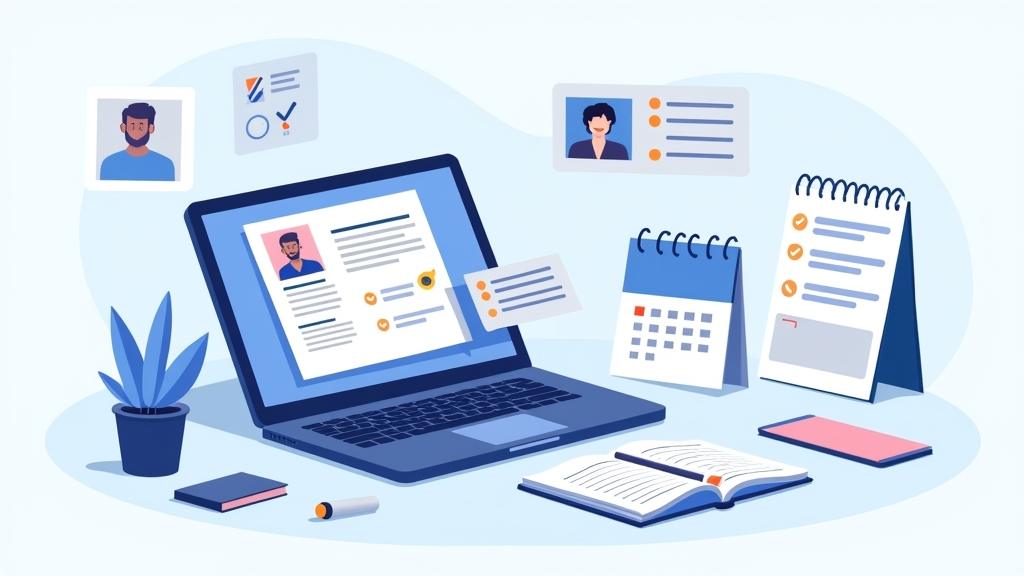
Do you know how to maintain eye contact in a video call? Look at the camera, not the screen. This creates the impression that you are looking directly at the interviewer. Practice your posture and speech before the interview. Record yourself answering common questions, such as "Tell us about yourself" or "What is your biggest professional challenge?". Platforms such as Big Interview offer interview simulators.
In addition to technical skills, be prepared for questions about remote working. "How do you deal with distractions at home?" or "How do you organize yourself to meet deadlines?" are common. Show that you have discipline and efficient methods, such as using the Pomodoro technique or time management tools.
Finally, ask the interviewer intelligent questions. This shows genuine interest. Ask about the company culture, performance expectations or growth opportunities. Avoid questions that are too generic or that can be answered with a quick search on the company's website.
Demonstrating Behavioral and Technical Skills During the Process
As well as technical knowledge, companies assess how you deal with challenges, work as part of a team and solve problems. Use the STAR methodology (Situation, Task, Action, Result) to structure your answers. For example:
"In my last project (Situation), we needed to deliver a report within 48 hours (Task). I organized the team into shifts and used automation to speed up data collection (Action), delivering the project 6 hours ahead of schedule (Result)."
If the process includes technical tests, practice beforehand. For developers, sites like LeetCode offer programming exercises. Designers can use Behance to show your portfolio.
Skills such as resilience and adaptability are also tested. Be prepared for hypothetical scenarios, such as "What would you do if a colleague from another time zone delayed a critical delivery?" Show that you seek collaborative solutions, such as adjusting deadlines or redistributing tasks.
Post-Interview Follow-Up: How to Stay Relevant Without Being Invasive
Sending a thank-you email within 24 hours of the interview is a valued practice. Be brief but specific: "Thank you for the opportunity to talk about [relevant topic]. I was even more motivated to contribute to [company objective]."
If you don't receive a response within the estimated timeframe, a polite follow-up after 7-10 days is acceptable. Avoid overcharging. Messages such as "I'd like to know if there are any updates on the process" maintain professionalism.
While you wait, keep training. Take a relevant course at Coursera or take part in webinars in the field. This not only improves your skills but also demonstrates proactivity - something you can mention in future interactions.
Dealing with Rejection and Turning Feedback into Opportunity
Receiving a "no" is never easy, but it can be a chance to grow. If possible, ask for constructive feedback. Questions such as "What could I improve for future opportunities?" help identify points for development.
Analyze feedback without taking it personally. If the company mentions a lack of experience with a tool, invest in learning it. Platforms such as Udemy offer affordable courses on various technologies.
Maintain a mindset of continuous improvement. Every selection process is an opportunity to refine your strategies. What was your biggest lesson from a recent remote interview? Use these experiences to make yourself an even stronger candidate for the next attempt.
The road to getting a remote job can be challenging, but with preparation, self-knowledge and persistence, you can significantly increase your chances of success. Now it's up to you: identify which of these strategies you need to strengthen and get started today!