
The Impact of the "Care Economy" on the Labor Market
Introduction: The Emergence of a New Economic Paradigm
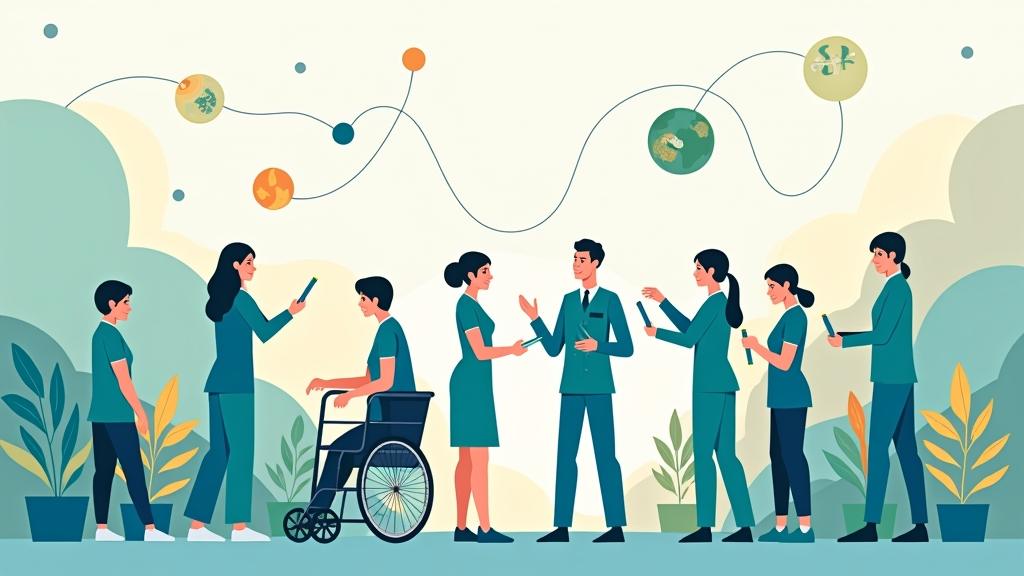
Have you ever stopped to think about how professions related to care - health, well-being and assistance - are shaping the future of work? While technology advances and traditional sectors undergo transformations, the so-called "economy of care" is emerging as one of the most robust pillars of the global economy. This phenomenon is not only a response to population aging or health crises, but also a structural change in the way we value time, health and collective well-being.
The care economy encompasses everything from nursing professionals and elderly caregivers to therapists, teachers and social workers. These occupations, often undervalued in the past, are now worth billions and guarantee the sustainability of entire societies. According to International Labor Organization (ILO)The sector is expected to generate more than 200 million jobs by 2030, surpassing industries such as technology in some countries.
But why is this happening now? The answer lies in a combination of factors: increased life expectancy, greater awareness of mental health, and the growing demand for personalized services. Imagine a family where both parents work full-time. Who takes care of the children? The grandparents? Who offers emotional support? These are needs that feed an ever-expanding market.
In this article, we'll explore how this transformation is redefining careers, public policy and even the notion of productivity. Get ready to understand why caring has become one of the most important - and lucrative - jobs of the 21st century.
The Rise of the Caring Professions: Global Data and Trends
If a decade ago employment discussions revolved around robotics and artificial intelligence, today the focus has changed. Professions that require human touchempathy and interpersonal skills are on the rise. Data from World Health Organization (WHO) show that by 2050, one in six people in the world will be over 65. This ageing population creates an unprecedented demand for caregivers, physiotherapists and home health professionals.
In Brazil, for example, the health and social care sector was one of the few that grew during the pandemic, with an increase of 12% in hiring in 2020, according to the IBGE. And it's not just developed countries that are investing in this area. In India, where the young population is still predominant, the wellness and yoga market is worth more than US$ 10 billion a year, driven by an ancient culture that is now taking the world by storm.
But what explains this appreciation? First of all, the intangibility of care. Machines can diagnose illnesses, but they can't replace the comfort of a nurse during treatment. Meditation apps are useful, but they don't replicate the active listening of a psychologist. What's more, the pandemic has highlighted the importance of these services. How many of us don't miss a hug or a shoulder to lean on in difficult times?
Another crucial point is feminization of this market. Historically, care work has been associated with women and seen as "unproductive". Today, although gender inequality persists, there is growing recognition of the economic value of these activities. Countries such as Canada and Sweden already include unpaid care (such as housework) in their GDP calculations, an advance that reflects profound changes.
Mental Health and Wellness: The Boom of a Market Without Borders
When was the last time you heard someone say they were going to therapy? Twenty years ago, this subject was taboo. Today, it's as common as going to the gym. Mental health has become one of the pillars of the care economy, with a global market that is expected to reach US$ 537 billion by 2030, according to the McKinsey.
Companies are hiring corporate psychologists, schools are investing in educational counselors, and even mindfulness apps like Headspace have become billion-dollar businesses. In the US, online therapy platforms such as BetterHelphave grown by more than 300% since 2020. In Brazil, the Vittude has become a benchmark for affordable psychological consultations.
Behind this growth is a cultural shift. The new generations not only talk openly about anxiety and depression, but also demand mental health policies at work. A study by Forbes revealed that 80% of millennials prefer jobs that offer emotional support to high salaries in toxic environments.
But the challenges remain. Despite the demand, many professionals in the field still face precarious conditions. In the SUS, for example, there are only 0.3 psychologists for every 10,000 inhabitants, according to the Federal Council of Psychology. How can we balance universal access with decent working conditions? The answer may lie in hybrid models that combine public and private care and disruptive technologies.
Technology and Care: How Innovation is Transforming the Field
Herein lies an interesting paradox: even though it is based on human relationships, the care economy is being revolutionized by technology. From telemedicine to care robots, innovations are expanding the reach and efficiency of these services.
Platforms such as TeleSUS allow patients in remote areas to consult doctors without leaving their homes. In Germany, robots such as Care-O-bot help the elderly with everyday tasks, from remembering to take their medication to making video calls with family members. And it's not just the elderly who benefit. Children with autism, for example, have been using apps such as Autism Speaks to develop social skills.
However, automation also brings dilemmas. A robot can deliver medicine, but it can't hold the hand of a frightened patient. How to find the balance? Experts suggest that technology should complementarybut not replace human labor. One example is the use of AI to speed up diagnoses, freeing up doctors to devote more time to personalized care.
For professionals, this means the need to adaptation. Caregivers of the future will need to master digital tools, from electronic medical records to wearable devices that monitor vital signs. Courses such as those offered by Coursera in digital health are already becoming essential.
Challenges and Opportunities: Precariousness vs. Valorization
Despite its potential, the care economy faces critical obstacles. Many workers - especially women, blacks and immigrants - work in precarious conditions, with exhausting hours and low wages. In the US, home care workers earn an average of US$ 12/hour, less than fast-food workers. In Brazil, day laborers and nannies often don't have basic labor rights.
This contradiction between social value and economic value is one of the sector's biggest challenges. How can such vital services be fairly remunerated? Some solutions are being tested:
- Professional certificationIn Japan, caregivers for the elderly undergo rigorous training and receive salaries equivalent to nurses.
- CooperativesModels such as the Home Care Cooperative in the USA show that it is possible to reconcile quality care with decent conditions.
- Public policiesPortugal approved a statute in 2022 that recognizes informal caregivers, guaranteeing them access to training and benefits.
For those entering the field, the tip is to specialize. Technical courses in gerontology or postgraduate degrees in public health open doors to better paid positions. In addition, the third sector offers opportunities in social projects funded by organizations such as UN.
The Future of Work: How to Prepare for the Care Economy
If you're reading this article and thinking of changing careers, the options are vast. From nursing technicians to wellness coaches, the market is hungry for qualified professionals. But how do you stand out?
First, develop emotional skills. Empathy, patience and resilience are just as important as technical knowledge. Afterwards, get up to speed. A Udemy offers affordable courses in psychological first aid, while universities such as USP have outreach programs in palliative care.
For entrepreneurs, there is room for innovation. How about creating an app that connects caregivers with families, like Cuidador.com.br? Or a support platform for solo mothers, offering everything from shared daycare to group therapy?
The most important thing to understand is that the care economy is here to stay. And it not only offers jobs, but also the chance to build a healthier and more equitable society. What role will you play in this transformation?
Conclusion: Caring is the New Producing
In a world marked by uncertainty, one thing is clear: care has become the most valuable currency. Whether it's caring for a patient, a child or the community itself, these jobs underpin the social and economic structure of the future.
Governments, companies and individuals need to take action. Investing in training, guaranteeing labor rights and integrating technology are essential steps. And you, reader, can start today: by valuing those who look after you, demanding public policies or even considering a career in this area.
After all, as the old saying goes: "What is essential is invisible to the eye". But in the care economy, the invisible is finally getting the value it deserves.